sea-based

Dec16

Mauritius has everything to offer water sports enthusiasts: diving, windsurfing, kite-surf… Surfers gather on this island in the Indian Ocean to take advantage of the year-long trade winds which are particularly favorable in winter.

Mauritius is the perfect place to try out or practice your big game fishing skills. Depending on the season, out at sea you can catch marlin, sword fish, sharks, tuna, skipjack and barracuda.

Must do: a catamaran cruise along the Mauritian coast – there’s nothing quite like discovering the island this way.
Dec07

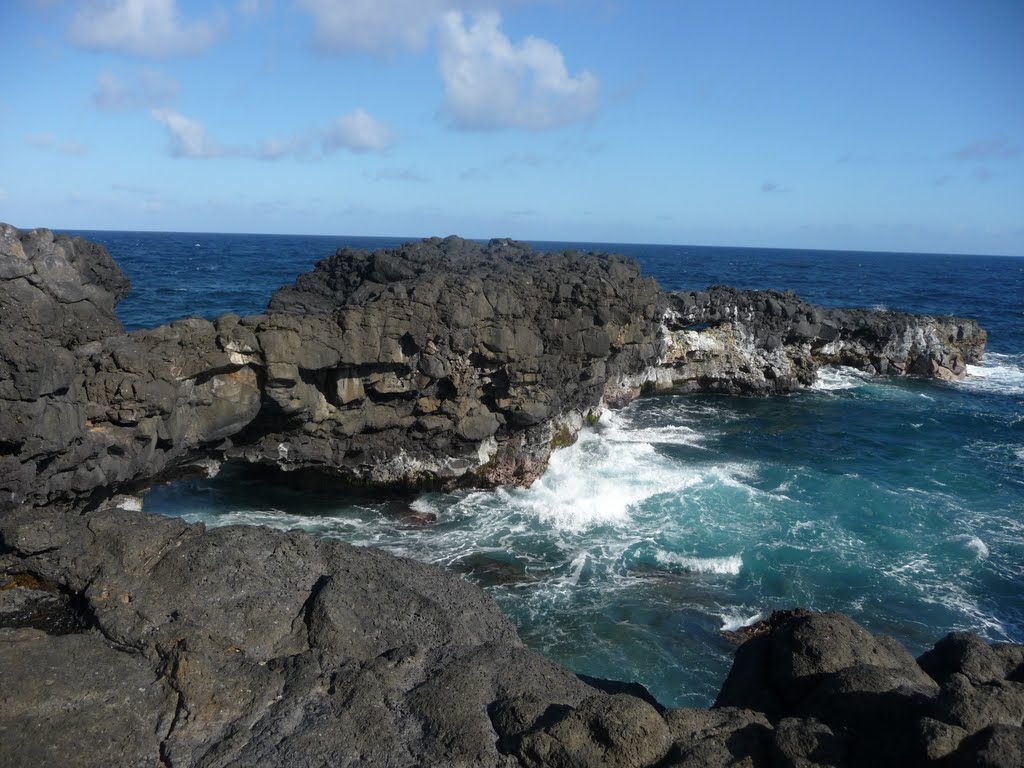
The reef, which nearly surrounds Mauritius, has a major break in it on the south-east coast. Instead of beach and calm lagoon, the sea rushes up against lava rocks and cliffs, carving out a variety of stacks and other coastline sculptures, the best known of which is Le Souffleur. If you walk for about 20 minutes along the cliffs east from Le Souffleur, you will come to a spectacular natural bridge formed when the roof of a sea cave collapsed. To get there take the Plaine Mahebourg to Souillac. About 6km from Plaine Magnien, as you enter the village of L Escalier, is the entry to the Savanna sugar mill. Follow the sign for some 4km to Le Souffleur, through the mill ground and the cane fields. The blowhole is at the end of the biggest promontory, joined to the shore and car park by landfill. Cars and bicycles can go all the way down. You can visit Le Souffleur Monday to Friday from 8am to 6pm and on Saturday from 7am to noon. Entry is free.

Dec07

Ile aux Aigrettes is a tiny coral island (25 hectares) just off the coast of the town of Mahebourg and near Blue Bay. The Island has been declared a nature conservation site and today is being preserved by the Mauritian Wildlife Foundation.

The tour on Ile aux Aigrettes takes about one and half hours with an additional 10 minutes each way for the boat trip. As part of this tour you will discover Ile aux Aigrettes and enjoy original Mauritian nature with an expert guide alongside leading the way. You will discover plants and animals, unique to Mauritius and found nowhere else in the world. Some of them have come close to extinction like the pink pigeon, a bird that was in danger of extinction for many years. You will also visit the indigenous plant nursery. There you should look out for the rare pink pigeon, the Mauritius Kestrel, endangered skinks and of course, the giant tortoises.

Dec07

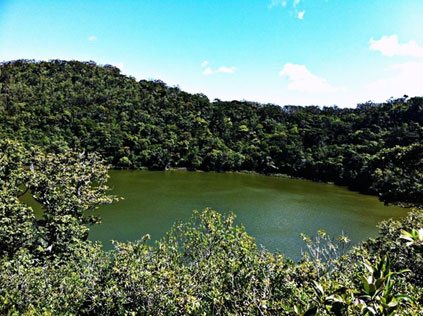
Basin Blanc is found further south and is a type of funnel shaped crater about half a mile in diameter that is filled with water. Here again, the borders are rich in plants and trees and it is a great place to view some endemic birds of Mauritius such as white tailed tropic bird, Mauritius bulbul, Mauritius cuckoo shrike etc.

Trou Kanaka is also found in the south of the island and resembles a true volcano in shape with shrubs bordering the rims up into the crater.

Dec07

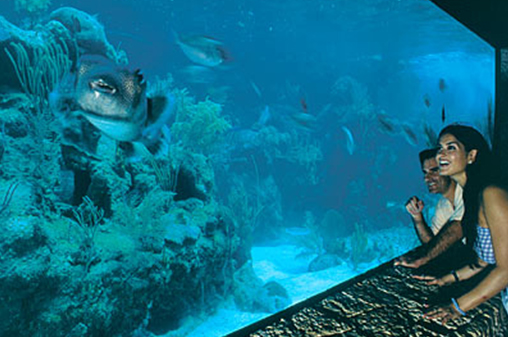
The aquarium of Mauritius is found in the north of the island at Pointe aux Piments. It is opened every day from 9.30 to 17.00 and from 10.00 to 15.00 on Sundays and public holidays. The aquarium harbours a vast diversity (more than 200 species) of marine organisms ranging from clown fishes to sponges. It is divided into 5 main rooms where numerous tanks containing different marine species are displayed.

In order to allow the visitor to know more about the species, near each tank, brief information on the marine species is listed on banners. Also, showcased at the aquarium are different species of dead corals as well as brief descriptions. Many of the specimens exposed in the tanks require deep diving to be observed in their natural habitats; presenting them in tanks on land itself is indeed an opportunity to enjoy the deep life. Many organisms have adapted to live in their environments in order to reduce their chances of being preyed upon; one such adaptation is camouflage, where the organisms blend harmoniously into their environment. The stone fish reflects this case perfectly: nestled between corals of dirty green, the tank where it is found can be taken to contain only corals at first sight, but on further observation a slight movement reveals it to be a live fish!

Dec07

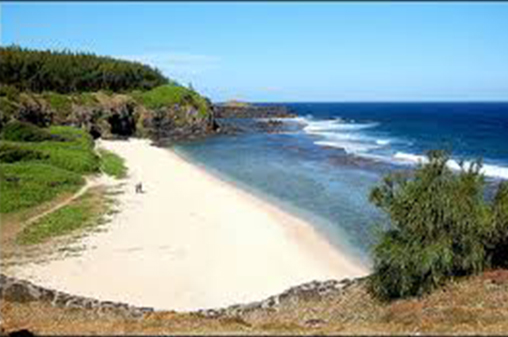
Mauritius is well known for its beaches and calm lagoons but in the south of the island there is one exception: Gris Gris. This area is quite different from the other open water areas on the island where there are strong currents crashing against sheer cliffs making it a dramatic but wonderful view. Gris Gris is a very common destination for tourists and a much loved one for locals too; it literally means dark atmosphere (Black Magic!) because of the heavy air of gloom that always hangs around the area.

Most of the island is surrounded by fringing reef; at Gris Gris however there is no such system resulting in the constant crash of the southerly swell waves (the waves in this part of the Indian Ocean) in the area. There are always strong gusts of wind blowing over the area (the South East Trade Winds, the winds that blow all over the island) making it quite a breezy cold place. The crashing waves can be observed from the rocky cliffs and it is always advised to take great care while hopping from rock to rock. A breath taking view of the white foam rolling over the waters coming to crash onto the cliffs with amazing force and then receding into nothingness is exposed.

Walking along the cliff top, La Roche Qui Pleure (The Weeping Rock) can be reached. It is a natural beauty of basaltic rock about 10 metres high that has been named because of the sight it offers. As the waves come crashing against the huge rock they lose their momentum as they fall back into the ocean looking like tear drops thus appearing almost like the rock is crying.

Further uphill another interesting sight is Le Souffleur (The Blowhole). Again the name speaks for itself; it is a sort of natural geyser that was formed when the roof of a huge marine cave collapsed thus forming a chimney type structure allowing water to enter freely and be pushed out by the force of the currents with strange crashing sounds. The blowhole is more amazing to see when the sea is rough making it look like an angry spitting chimney of white foam.

Nevertheless, it is a great place to enjoy the peaceful scenery, the sound of the crashing waves, the salty smell of the air and feeling the spray of the water on your face.

Dec07

In the surrounding strolling spaces of the Mahebourg waterfront, you will certainly have the opportunity to taste traditionally cooked food, very tasty fish and seafood. A stroll on the waterfront is particularly refreshing in the breeze of the south east trade wind while you watch the passing fishing boats, the small islet with its single red-roof house and also the “Ile aux Phare” on the far horizon.

Dec07

The Blue Bay lagoon is a very rich marine area in terms of flora and fauna. However, over the years, development in the surroundings has had a very negative impact on the marine life (pollution, sedimentation, and high pH and turbidity levels).

In an attempt to protect the vulnerable habitats and damaged ecosystems found there, Blue Bay was declared a national park in 1997 under the Wildlife and National Parks Act and became officially a marine protected area in the year 2000 under the Fisheries and Marine Resources Act 1998.

The park is enclosed by pillar shaped buoys because they are more stable and resistant to rough waters as opposed to the older conical shaped buoys thus demarking the protected zone to the public. In 2007, a zoning scheme was adopted for different activities in the park. Permissible activities thus include swimming, diving, snorkeling, glass bottom boating and water skiing.